Abstract
Pulse Frequency Modulation (PFM) is the latest patent-pending innovation from New Scale Technologies, Inc. (New Scale) that demonstrates our leadership in piezoelectric ultrasonic motors and smart positioning modules. This patent-pending feature is now available for all M3 Modules using Squiggle® motors. Compared with previous control methods, PFM offers more effective closed-loop speed regulation and reduced acoustic noise. When combined with New Scale’s patented Pseudo Voltage Control (PVC), PFM+PVC optimizes power efficiency and velocity smoothness.
Technical Background
New Scale has been delivering high-performance Micro-Mechatronics Modules (M3) since 2012. These “all-in-one” smart modules integrate motor, drive electronics, precision mechanism, position sensors, and digital controller that accepts SPI, I2C, or UART commands. These systems provide our customers with the smallest size, fastest integration, and lowest total cost.
Previous Squiggle motor systems were driven using Pulse Width Modulation (PWM) or Pseudo Voltage Control (PVC) methods. These methods’ details are disclosed in US patents:
PWM: US Patent No. 8,450,905
PVC: US Patent No. 11,196,375
The key elements of these driving methods are:
- Motors operate near their optimum resonant frequency.
- Speed is regulated by adjusting the drive waveforms at a fixed drive frequency by:
- Changing pulse-width.
- Changing percentage of full-bridge versus half-bridge.
- Resonance amplitude and motor speed are highest when:
- Pulse-width is one-half of the pulse period.
- 100% full-bridge drive.
- Reduced pulse-width and percentage of full-bridge lowers resonance amplitude and speed.
For more information on Squiggle motors, please see: US Patent 8,217,553
Existing Squiggle motor speed control methods have limitations. When the pulse-width and percentage full-bridge drop below a certain threshold, the resonance is stopped by static friction, and the motor stops moving. This limits the dynamic speed range. Slower velocities require the motor drive to be quickly turned on and off (Burst Mode), which results in speed oscillations and audible noise.
Achieve greater travel, higher speeds, and integrated control—all in a compact design built to scale.
Pulse Frequency Modulation (PFM)
The new PFM control method regulates piezoelectric motor velocity through the adjustment of the frequency of the drive signals. Maximum speed is achieved when the drive frequency is near the motor resonant frequency. By adjusting the drive frequency away from the resonant frequency, the motor speed is reduced.
Using PFM, the velocity changes monotonically and more predictably. The result is smoother speed control, greater dynamic range, and reduced acoustic noise compared to PWM or PVC.
The PFM innovation is implemented using a digital full-bridge drive circuit to maximize voltage applied to the piezoelectric elements, reduce component count and size, and minimize power. Drive frequency is changed by adjusting the pulse period while keeping the pulse-width constant at 50% of the period. As shown in Figure 1, increasing drive frequency above the resonant frequency provides smoother closed-loop control and greater efficiency than operating below resonance.
PFM+PVC Method
PFM can also be combined with PVC, which is called PFM+PVC control method. It regulates speed by adjusting operating frequency and simultaneously adjusting the percentage of full-bridge versus half bridge pulses. This method offers several advantages:
- Maintains continuous drive signals at lower speeds, avoiding burst mode.
- Reduces acoustic noise further as compared with PVC alone.
- Achieves overall the best power efficiency. See Figure 4.
Test Results
In Figure 1, the relationships between motor drive frequency, motor open loop speed, power, and efficiency for the PFM method are illustrated for a moderately loaded M3-LS-3.4 stage. Efficiency is the ratio of electrical power to mechanical output power (speed times force). The motor resonant peak frequency is the maximum electrical power. As the drive frequency increases, the motor speed decreases in a predictable manner, enabling smoother control. At the same time, efficiency initially increases then decreases. This chart also shows that increasing frequency provides improved speed control when compared to decreasing frequency.
The improved dynamic range of open-loop speed control is also illustrated in Figure 1. A speed range from 25 mm/sec to 2.5 mm/sec is achieved. This is a dynamic range of 10:1. By comparison, the dynamic range of open-loop velocity for PWM and PVC is typically 3:1.
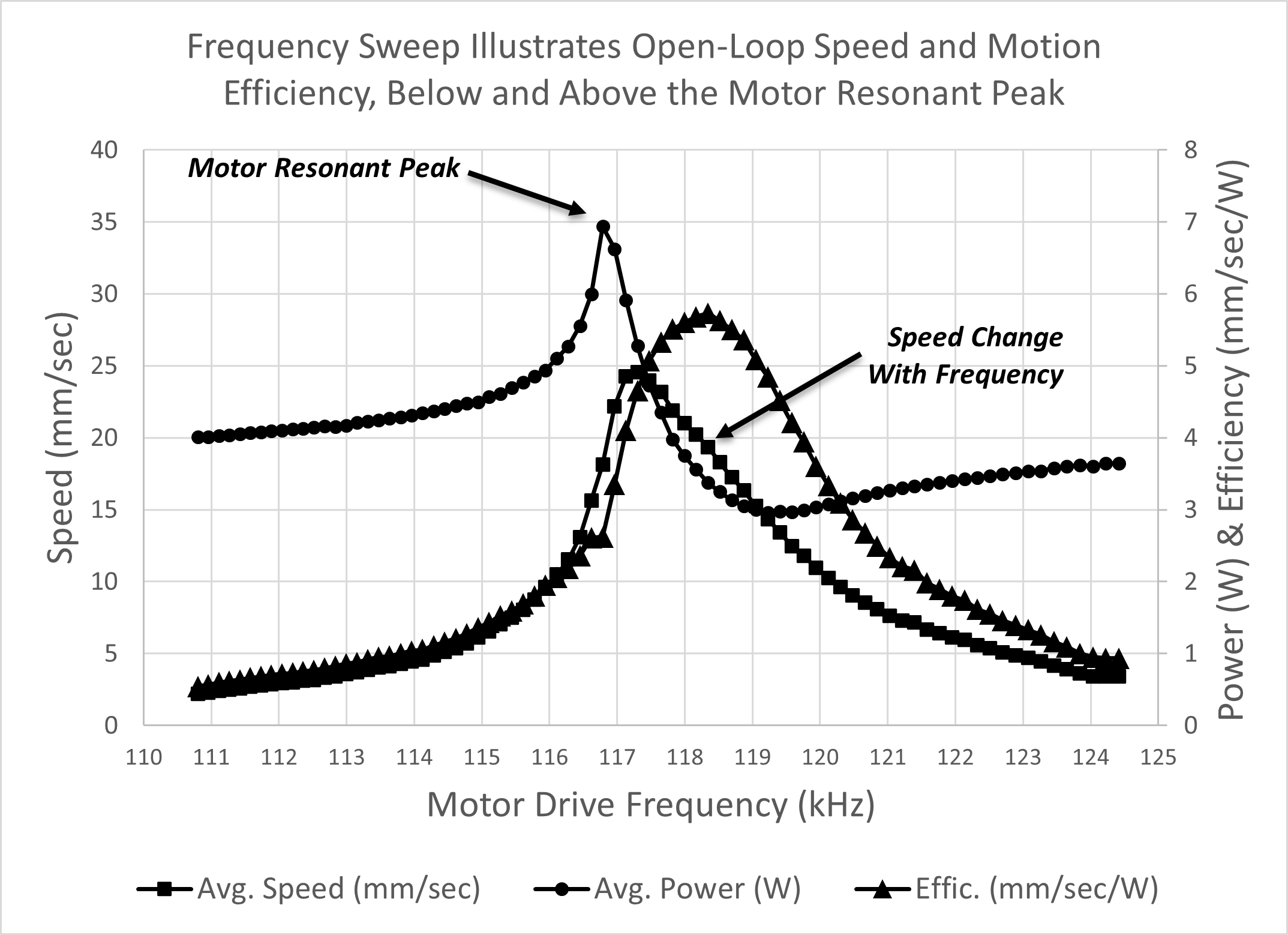
Figure 1: Motor drive frequency vs. open-loop speed, power, and efficiency (M3-LS-3.4).
- Resonant peak corresponds to peak power.
- Frequencies above resonance provide smoother speed control and higher efficiency.
Figure 2 shows the dramatic improvement in velocity smoothness for PFM and PFM+PVC in closed-loop operation. This improvement is especially significant in the reverse direction, where gravity is accelerating the moving stage. In this example, an M3-LS-3.4 stage moves a 100-gram vertical load in reverse (in the gravity direction) with closed-loop speed set at 5 mm/s. The traditional PVC method produces speed oscillations and corresponding chattering noise. By comparison, both PFM and PFM+PVC methods smooth velocity and reduce acoustic noise.
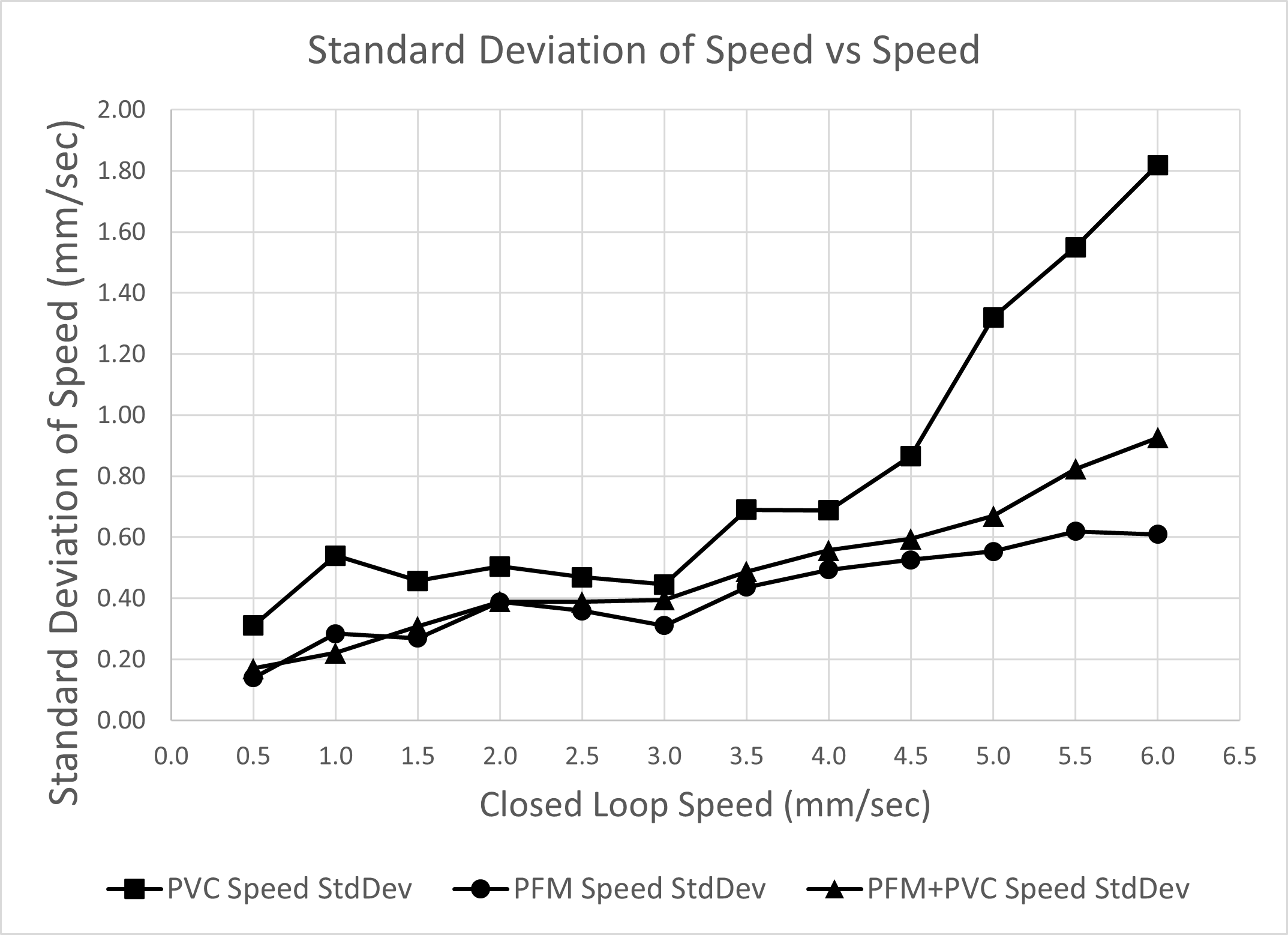
Figure 3: Speed variance vs. average closed-loop speed.
- PFM and PFM+PVC show much lower variance than PVC.
- PFM slightly outperforms PFM+PVC in stability and lower acoustic noise.
Figure 4 shows the power consumed by a moderately loaded M3-LS-3.4 stage as a function of average closed-loop speed for PVC, PFM, and PFM+PVC control methods. PFM requires two to three times more power depending on the velocity. The combination of PFM+PVC reduces the power to a similar level as PVC alone.
These results show that the PFM+PVC control method is the overall best choice for most applications. Velocity smoothness, acoustic noise, and operating power are optimized.
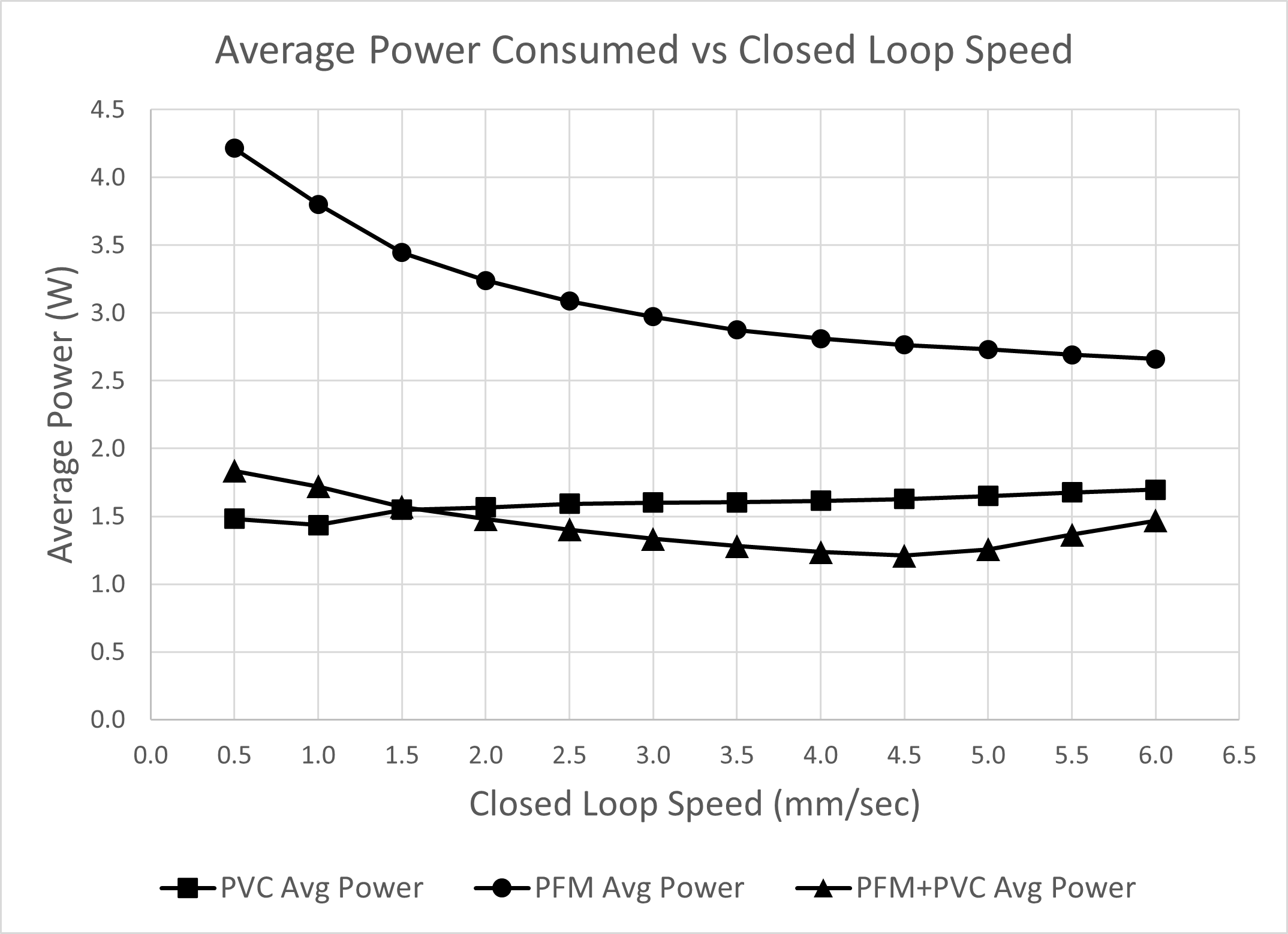
Figure 4: Power consumption vs. closed-loop speed.
- PFM consumes more power than PVC.
- PFM+PVC achieves best efficiency at medium to high speed.
- PVC remains most efficient at low speed.
- Overall PFM+PVC methods achieve the best overall performance for most velocities.
Summary
Pulse Frequency Modulation (PFM) creates a new capability for speed control of all M3 modules using Squiggle motors. PFM achieves smoother velocity over a wider dynamic range with less acoustic noise. PFM mode does require higher operating power.
When PFM is combined with PVC (PFM+PVC) the power is reduced while maintaining virtually the same velocity smoothness. This is the optimum control mode for most applications and is the factory setting for all M3 modules including:
Please contact New Scale Technologies to learn how to upgrade your product firmware and setting to use PFM+PVC or for other technical support.